


After Builders Cleaning in London: What a Post-Renovation Clean Actually Includes

Photo of the Mr Clean cleaner carrying out detailed cleaning during the job.
A Mr Clean team member carrying out detailed cleaning after building or refurbishment work.
You have finally finished the extension, loft conversion, kitchen renovation or bathroom refurbishment.
Then you notice the dust.
It is on the skirting boards. Inside the window tracks. Around the radiators. On shelves you thought were protected. You wipe it away, only to find another fine layer appearing elsewhere.
That is why after builders cleaning in London is different from an ordinary domestic clean.
Building and refurbishment work can leave fine dust and residue across a property. It can settle on high surfaces, work its way into edges and tracks, and spread between rooms.
A quick vacuum and mop may improve the appearance, but a post-renovation clean often requires a more systematic approach.
In this guide, we explain what an after-builders clean can include, where renovation dust tends to hide, when to book the cleaning, what can affect the cost and how to prepare your property.
What Does an After-Builders Clean Actually Include?
An after-builders clean is a detailed cleaning service designed around the dust and residue left after construction, refurbishment or installation work.
At Mr Clean Housekeeping Services, the service scope can include areas such as:
Fine builders' dust removal from accessible surfaces
Cleaning skirting boards, sockets and fixtures
Wiping doors, frames and switches
Cleaning kitchens and bathrooms
Vacuuming and mopping floors
Cleaning interior windows and sills
The exact scope should always be agreed before the work begins.
An after-builders clean is not automatically the same as building work, repairs, decorating or waste removal. Paint and waste removal are not part of the standard cleaning scope and should be discussed separately if required.
Paint splashes, plaster marks, silicone or adhesive residue also need to be assessed carefully. Some marks may be removable, while others may have hardened, affected the underlying surface or require specialist treatment.
Cleaning can improve some marks, but it cannot repair damaged surfaces or guarantee complete removal of every type of residue.
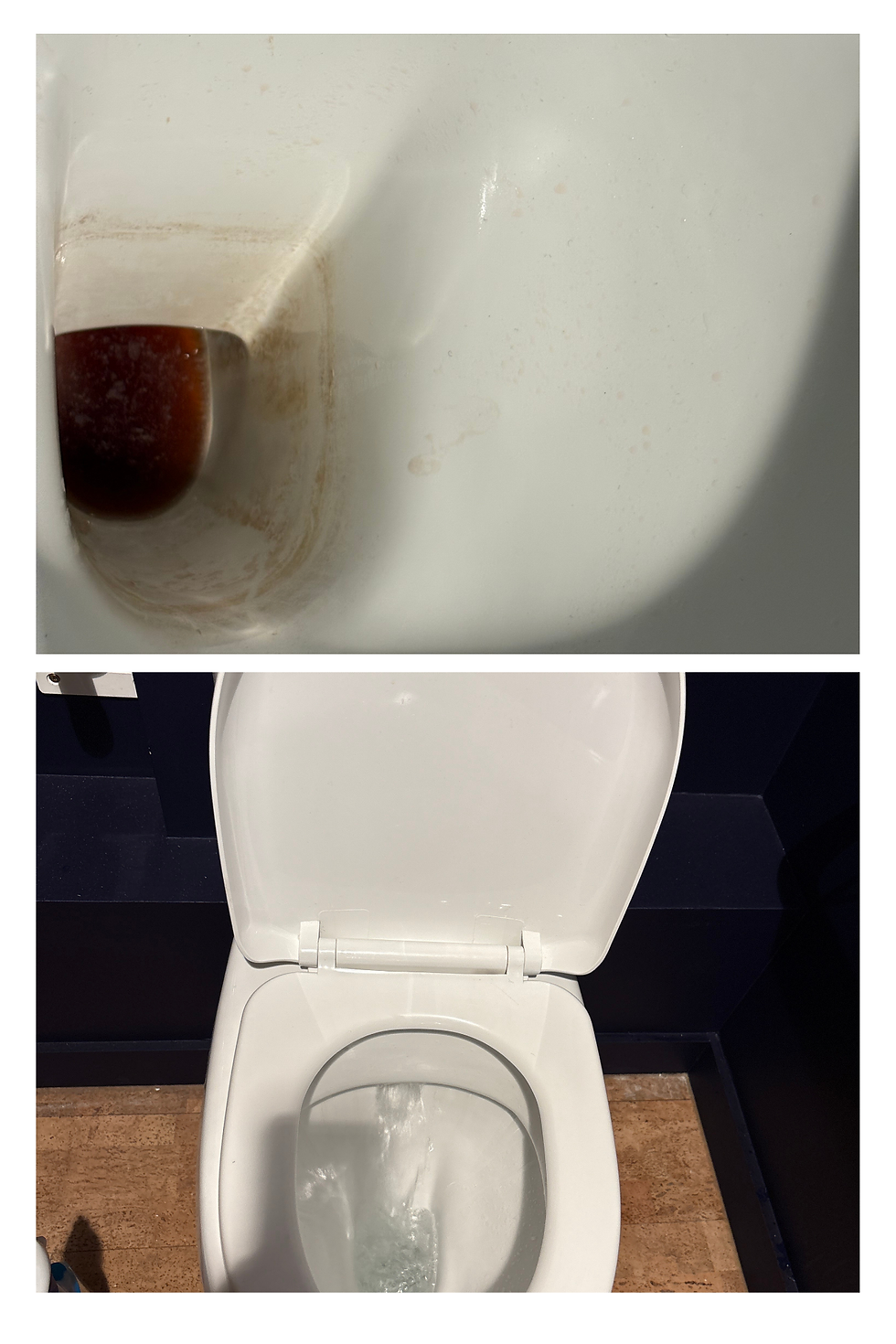
Before and after photos showing a toilet area before and after professional cleaning.
What does an after-builders clean actually include?
An after-builders clean is a detailed clean designed for the residue left after construction, refurbishment or installation work.
At Mr Clean Housekeeping Services, the listed service scope includes:
Fine builders’ dust removal from accessible surfaces
Cleaning skirting boards, sockets and fixtures
Wiping doors, frames and switches
Cleaning kitchens and bathrooms
Vacuuming and mopping floors
Cleaning interior windows and sills
The exact scope should always be agreed before work begins. A renovation clean is not automatically the same as waste removal, decorating, repairs or appliance installation.
Paint and waste removal may need to be excluded or discussed separately. Paint splashes, plaster marks and adhesive residue also need a careful assessment. Some can be removed safely. Others may have hardened, marked or damaged the underlying surface.
After-builders cleaning versus a regular clean
A regular domestic clean helps maintain a property between visits. It usually focuses on everyday dust, dirt, kitchen use, bathrooms and floors.
An after builders clean starts from a different position. The property may have:
Fine plaster dust across several rooms
Residue on newly fitted surfaces
Dust inside cupboards and drawers
Marks around doors, frames and handles
Film on glass and window tracks
Debris around flooring edges and grout
Dust inside accessible vents or fittings
A deep clean may address many of these areas. However, after-builders cleaning is planned around the particular mess created by building work.
Need a general reset rather than a post-renovation clean? Our Deep Cleaning service may be more suitable.
Where does builders’ dust hide?
Dust is easiest to notice on a dark floor or windowsill. The less obvious areas often take more attention.
Check:
Skirting boards and the tops of architraves
Window sills, frames, seals and tracks
Light fittings and reachable ceiling fixtures
Radiators and the wall behind them
Inside cupboards, drawers and wardrobes
Door frames, hinges and handles
Accessible vents and grilles
Flooring edges and grout lines
Glazing affected by plaster dust or hard-water film
Kitchen splashbacks and newly installed units
A useful question is: If I opened this cupboard or moved this door, would I find dust behind it?
That is the difference between a surface tidy-up and a detailed post-construction clean.

Detailed cleaning of door frames and edges after building or refurbishment work.
Why a Standard Domestic Clean May Not Be Enough
Fine dust can spread widely throughout a property.
The way the cleaning is carried out can therefore matter. Starting with a wet cloth on loose dry dust, for example, can make the residue harder to remove from some surfaces.
A systematic approach may involve:
Removing larger debris where this is included and safe.
Removing loose dust before wet wiping.
Vacuuming suitable areas.
Working from higher surfaces downwards.
Repeating cleaning passes where dust has resettled.
Cleaning glass after surrounding dust has been reduced.
Finishing with floors.
Checking the agreed areas and carrying out appropriate touch-ups.
New surfaces also need care.
Scraping plaster or paint aggressively can scratch glass, damage coatings or mark flooring. Permanent staining, cured adhesive, damaged sealant and baked-on material may not be cleaning problems alone.
The right approach depends on the material, its condition and the type of residue present.
A genuine Mr Clean cleaning demonstration from an after-builders cleaning job.
When Should You Book an After-Builders Clean?
Ideally, book the cleaning after the dusty building work has finished.
That usually means waiting until:
Plastering, sanding and cutting are complete
Installers have finished their work
Surplus materials and tools have been removed
The property has safe access
Newly fitted surfaces are ready to be cleaned
No further dusty trade work is expected
Cleaning too early can mean that the property becomes dusty again when another contractor returns.
For larger projects, it may be useful to discuss the cleaning schedule with the project manager. In some situations, heavier debris removal and the final detailed clean may need to be treated as separate stages.
The time required also varies. A small affected area may be manageable in one visit, while a larger refurbishment may require more time or additional attention.
Genuine footage showing detailed cleaning during an after-builders cleaning service.
Renting, selling or moving in after renovation
A clean can be especially useful before:
A landlord hands a refurbished property to a tenant
An estate agent prepares a home for photography or viewings
A property manager completes a handover
An Airbnb host prepares a newly upgraded space
A homeowner moves furniture into a renovated room
If the property is also changing occupants, compare the required scope carefully. An after-builders clean focuses on construction residue. An End of Tenancy Cleaning service is designed around a different handover situation.
Carpets may need separate consideration. Dust trapped in fibres should be assessed alongside the carpet’s material, condition and manufacturer’s guidance. See our Carpet Cleaning service if soft flooring needs additional attention.
What affects the cost and duration?
There is no sensible one-size-fits-all price for post-construction cleaning.
A quote may depend on:
Property size
Number of rooms affected
Amount of dust ingress
Whether the work involved plastering, sanding, cutting or demolition
Glazing and frame types
Flooring and grout
Paint, plaster or adhesive residue
Access, parking and lift arrangements
Whether the property is furnished
Inside cupboards, drawers or appliances
Accessible vents and additional areas
Whether waste or specialist residue removal is required
The number of visits is also variable. So is the drying time. A company should discuss the property and expected condition rather than promise a fixed result without enough information.
DIY After a Renovation Versus Hiring a Professional
DIY cleaning can work for a small, contained project with limited dust and plenty of time.
You may choose to do it yourself if:
Only one room was affected
The property is empty
You have suitable cleaning equipment
You can clean in stages
You are comfortable following surface-care instructions
Professional cleaning may be more practical when dust has travelled through several rooms, the property is large, the handover date is close or you need help working around newly finished surfaces.
The advantage is not simply speed.
A structured cleaning process can make it easier to work systematically through the property rather than repeatedly discovering missed areas.
How to Prepare Before the Cleaners Arrive
Before the appointment, it can help to:
Confirm that dusty trades have finished
Remove tools, materials and packaging
Tell the cleaning company which rooms were renovated
Identify delicate flooring, stone, glass or newly treated surfaces
Remove personal items where possible
Empty cupboards if their interiors are included
Make sure water, electricity and safe access are available
Secure valuables and fragile belongings
Explain any paint, plaster or adhesive marks in advance
Confirm whether internal windows, vents or appliances are included
Good preparation helps the cleaner focus on the agreed work rather than working around avoidable obstructions.
How to Choose an After-Builders Cleaning Company
Before booking, ask clear questions.
For example:
What is included in the after-builders clean?
Are internal windows and sills included?
Are cupboards and drawers included?
Is waste removal separate?
How are paint and plaster residues assessed?
What happens if dust resettles?
How will the cleaning scope be agreed?
Is the team appropriately insured and vetted?
How will the quote be calculated?
Are additional services available if the property requires them?
The most important thing is to understand the scope before the work starts.
A clear discussion about the property's condition, access and areas requiring attention can help avoid misunderstandings later.
After Builders Cleaning in London and North & North West London
Renovation dust can be a challenge in many types of London property, from modern flats to older homes with detailed woodwork, awkward access and multiple connected rooms.
In North and North West London, practical considerations may also include:
Parking
Stairs
Lifts
Controlled building access
Property size
Whether the property is occupied
Whether furniture has already been moved in
Mr Clean Housekeeping Services focuses on London, with particular coverage across North and North West London.
Availability and suitability depend on the property and the cleaning requirements agreed in advance.
What Should I Tell the Cleaning Company?
When requesting an after-builders cleaning quote, it helps to provide as much useful information as possible.
For example:
What type of work was completed?
Was it a kitchen renovation, bathroom refurbishment, extension, loft conversion, decorating project or another type of building work?
Which rooms are affected?
Tell the cleaning company whether the dust is limited to one room or has spread throughout the property.
What condition is the property currently in?
Mention visible dust, plaster residue, paint marks, packaging, flooring residue or other relevant conditions.
Is the property furnished?
Furniture can affect access and the time required.
When do you need the property ready?
This helps establish whether the cleaning needs to fit around a move-in, handover, viewing or other deadline.
Frequently Asked Questions
Is one after-builders clean enough?
Sometimes.
It depends on the size of the property, the amount of dust and the type of building work that took place. Dust can resettle, so some properties may require additional attention or a return visit.
Do I need to remove everything before the cleaners arrive?
Remove tools, waste, packaging and personal items where possible.
If cupboards, drawers or furnished areas need to be cleaned, discuss this when agreeing the scope.
Can builders' dust damage belongings?
Fine dust can settle on surfaces and enter certain mechanisms or fabrics.
Protect valuable or fragile belongings and follow the manufacturer's care guidance where appropriate.
Do you clean inside cupboards?
This should be confirmed when the scope is agreed.
Cupboard interiors may need to be emptied first and can affect the time required.
What about paint splashes and plaster marks?
Some residue may be removable, but this depends on the surface, the material and how long it has been present or cured.
Cleaning is not repair work, and aggressive scraping can cause damage.
Can after-builders cleaning be completed in one visit?
It can be, depending on the property and its condition.
The amount of work, size of the property and extent of the renovation residue all affect the time required.
Should cleaning happen before furniture arrives?
Cleaning before furniture arrives can provide better access to floors, skirting boards and corners.
The property should also be free from further dusty work.
Does after-builders cleaning include rubbish removal?
Not automatically.
Waste and leftover building materials should be discussed separately before booking.
Is after-builders cleaning the same as a deep clean?
They overlap, but they are not identical.
A deep clean generally focuses on accumulated household dirt and overlooked areas, while an after-builders clean is specifically concerned with the condition created by construction or refurbishment work.
Ready to Get Your Property Cleaned After Building Work?
If your renovation is finished and the property is ready for cleaning, the next step is to establish exactly what needs attention.
When contacting Mr Clean Housekeeping Services, let us know:
Which rooms were affected
What type of renovation took place
Whether the property is furnished
Whether windows, cupboards or additional areas need attention
Your preferred cleaning date
Any access requirements
We can then discuss the property and the cleaning requirements with you.
You can then request a tailored After Builders Cleaning service quote for your London or North London property. 🧽


Comments