


The Ultimate Deep Cleaning Checklist: Everything Tenants, Landlords & Estate Agents Expect in 2026
Moving house in North West London is enough to make anyone’s head spin. Between the packing tape and the removal vans, there’s a looming shadow: the inventory inspection. In 2026, the bar for property cleanliness is higher than ever. Gone are the days when a quick "once-over" with a vacuum would suffice. Landlords and estate agents now expect a level of hygiene that mirrors a showroom.
But what actually counts as a "deep clean"? Is it just a regular clean with more elbow grease, or something entirely different?
At Mr Clean Housekeeping, we live and breathe these standards every day. Whether you're a tenant fighting for your deposit or a landlord prepping for a new high-end let, this is the definitive guide to what a professional deep clean involves in 2026.
What Exactly Does a Deep Clean Include?
A deep clean isn’t about surface-level tidying. It’s about tackling the grime you don’t see during your weekly chores. While a regular cleaning service focuses on maintenance, our deep cleaning services in London are a surgical strike against accumulated dust, limescale, and grease.
We don’t just clean the top of the stove; we degrease the extractor filters. We don’t just mop the floor; we scrub the grout lines. It’s the difference between "clean enough" and "inventory-ready."
The Ultimate Room-by-Room Deep Cleaning Checklist
If you're tackling this yourself, or hiring a team, this is the minimum standard expected by top North West London estate agents this year.
1. The Kitchen: The Inspection Make-or-Break
The kitchen is where most deposits are lost. Inspectors look for grease in the places you’ve forgotten.
Oven & Hob: Deep degreasing of the interior, racks, and glass door.
Extractor Hood: Soak filters in professional degreaser and wipe the housing.
Appliances: Pull out the fridge and washing machine. Clean behind them. Scrub the door seals.
Cupboards: Wipe inside, outside, and the very tops (the "dust shelf").
The Sink: Descale the taps until they shine. Use a toothbrush for the overflow and drain.
2. Bathrooms: Victory Over Limescale
London’s hard water is the enemy.
Tiles & Grout: Scrub every line. Treat any signs of mould with professional-grade inhibitors.
Toilet: Descale the bowl (not just the rim) and sanitise the entire base and cistern.
Glass Screens: Use a squeegee and a descaler to remove every single water spot.
Fittings: Polish the shower head and hose. Don't forget the radiator/towel rail.
3. Living Areas & Bedrooms: The Detail Phase
Windows (Internal): Frames, sills, and glass should be streak-free.
Skirting Boards: These should be hand-wiped, not just dusted.
Door Frames & Handles: Clean the tops of the doors where dust settles.
Light Switches & Sockets: Polish away every fingerprint and smudge.

DIY Cleaning vs. Professional Deep Cleaning
Is it worth doing it yourself? Let’s look at the data.
Feature | DIY Cleaning | Professional Deep Cleaning |
Time Required | 15–20+ hours (for a 1-bed) | 4–6 hours (team of 2) |
Equipment | Supermarket sprays & sponges | Industrial degreasers, HEPA vacuums |
Cleaning Standard | Visual cleanliness | Sanitised & Inventory-standard |
Deposit Protection | High risk of deductions | Maximum protection |
Inspection Pass Rate | Variable | 99% (with a guarantee) |
Real Case Study: 150-Minute Transformation in West Hampstead
On 5 July 2026, we were called to a studio flat in West Hampstead (NW6). The tenant was moving out and was understandably anxious about the state of the kitchenette and the bathroom. A studio might seem small, but the level of detail required for a deep clean remains the same as a mansion.
Our approach wasn't to just "start cleaning." We arrived with a structured plan to maximise our efficiency. Professional cleaning isn't about two people doing the same job; it’s about a divided-and-conquered strategy.
The Division of Labour: Our lead cleaner focused on the high-intensity areas:
Sanitising and descaling the entire bathroom.
Polishing the internal studio window to a crystal finish.
Expertly mopping the studio and kitchen floors with a neutral pH cleaner.
Meanwhile, the second team member tackled the "hidden" dirt:
Deep cleaning the oven and all kitchen appliances.
Wiping down the internals and externals of all wardrobes and fitted furniture.
Vacuuming every inch of the property before the mopping began.
The Result: By dividing the work, we ensured that the kitchen received a full two hours of attention while the bathroom was simultaneously being restored to its original glory. No time was wasted, and no corner was missed. The property was left completely hygienic and ready for the next tenant to move in that evening.

PHOTO – Bathroom Before & After

PHOTO – Exhaust fan Before & After]
The Lesson: This project perfectly demonstrates that teamwork is about specialisation. When you hire a professional team, you aren't just paying for more hands; you're paying for a coordinated system that ensures every room gets 100% of the attention it deserves.

PHOTO – Kitchen Sink Before & After

PHOTO – Window Before & After
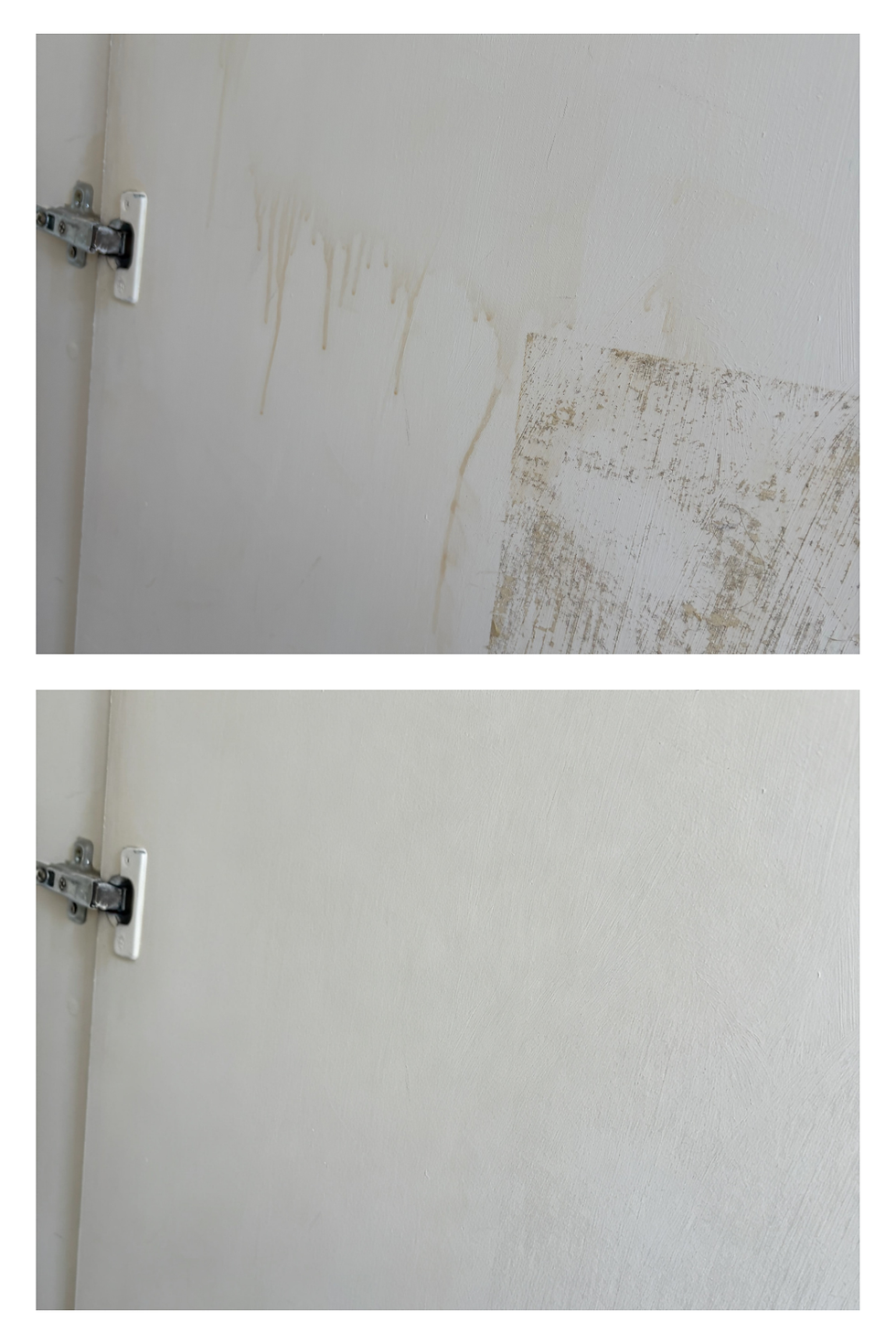
PHOTO – Wardrobe Door Before & After
Common Mistakes Tenants Make
Ignoring the Ceiling: Cobwebs in the corners of high ceilings are an instant red flag for inspectors.
Using the Wrong Chemicals: Using bleach on everything can damage surfaces. For instance, removing a tough mark on a sofa requires knowing how a professional chooses the right stain remover.
Forgetting the Light Switches: It’s a 10-second job that makes a massive psychological difference to an estate agent.
Cleaning vs. Deep Cleaning: Many tenants do a standard "Saturday morning" clean and wonder why they fail. For the full lowdown, check our guide on Deep Cleaning vs Regular Cleaning.
What Landlords and Estate Agents Inspect First
In North West London, agents from firms like Foxtons or Dexters follow a strict checklist. They will check:
The "Finger Test": They’ll run a finger along the top of the door frames and the back of the radiator.
Oven Racks: If there’s burnt-on carbon, you’ll be charged for a professional oven valet.
The Fridge Seal: Food debris in the rubber folds is a common reason for a failed inspection.
Professional Tips from Experienced Cleaners
The Top-to-Bottom Rule: Always start at the ceiling and work down. Gravity is your friend; don't let dust fall on a floor you've already mopped.
The "Dwell Time" Secret: Professional chemicals like Citrus Gel or Solvex need time to work. Apply them, let them sit for 5–10 minutes, and the grime will practically wipe away.
Vacuum Twice: Once before you start to remove dry soil, and once at the very end to catch anything that fell during the cleaning process.
FAQ: Deep Cleaning in 2026
How long does a deep clean take? For a standard 1-bedroom flat, expect a professional team to spend at least 4 to 6 hours.
Do I need to be present? Not at all. In fact, most of our clients in West Hampstead and Hampstead prefer to leave us the keys so we can work without obstruction.
Is carpet cleaning included? Standard deep cleaning includes thorough vacuuming. However, if your contract specifies professional steam cleaning, you should book our Premium Carpet Cleaning as an add-on.
Conclusion
Deep cleaning is more than a chore: it’s an investment in your peace of mind. Whether you’re trying to secure a deposit return or preparing to welcome a new tenant into a luxury NW6 property, the details matter.
Don't risk your deposit or your reputation on a "DIY effort" that might fall short of 2026 standards. Experience the precision of a professional team that knows exactly what North West London estate agents are looking for.
Ready to see your property sparkle?Request a free, no-obligation quote today and let Mr Clean Housekeeping take the stress out of your move.


Comments